History

Who Is a Nyikem?

A fuller historical note on the meaning of Nyikem, the honorific title of Dasho, the red scarf tradition in Bhutan, and the foundations that later shaped the formation of Nyikem Gongzhu Tshogpa.

Background

Meaning of Nyikem and Dasho

Definition: Nyikelm carries the sense of double rank or double entitlement.

  • Red scarf: With conferment by His Majesty the King, a person becomes Nyikelm and is closely associated with the honorific title Dasho.
  • Historical context: Medieval explanations connect Nyikelm with entitlement to two riding ponies, while some other officials such as Chipzhon were entitled to one.
  • Earlier usage: Historical accounts mention Dashos in Paro before Zhabdrung Ngawang Namgyal's arrival in Bhutan in 1616 CE.
  • Public standing: References such as Dasho Jangsapa suggest that Dasho was linked with patrons and persons of recognized standing.

Research note: The article draws from Bhutanese sources, translated legal texts, and interaction with retired and serving public servants because no single comprehensive study is devoted entirely to Nyikem and Dasho.
Historical Notes

Kabne, Rank, and Earlier Governance

The document traces the symbolic background of the red scarf through Bhutanese discussions of kabne. Gyalzim Dasho Dorji Gyaltshen writes that the use of different robes and scarves was tied to the display of respect, and the article explains that this culture of differentiated dress later became part of Bhutan's public order and official hierarchy.

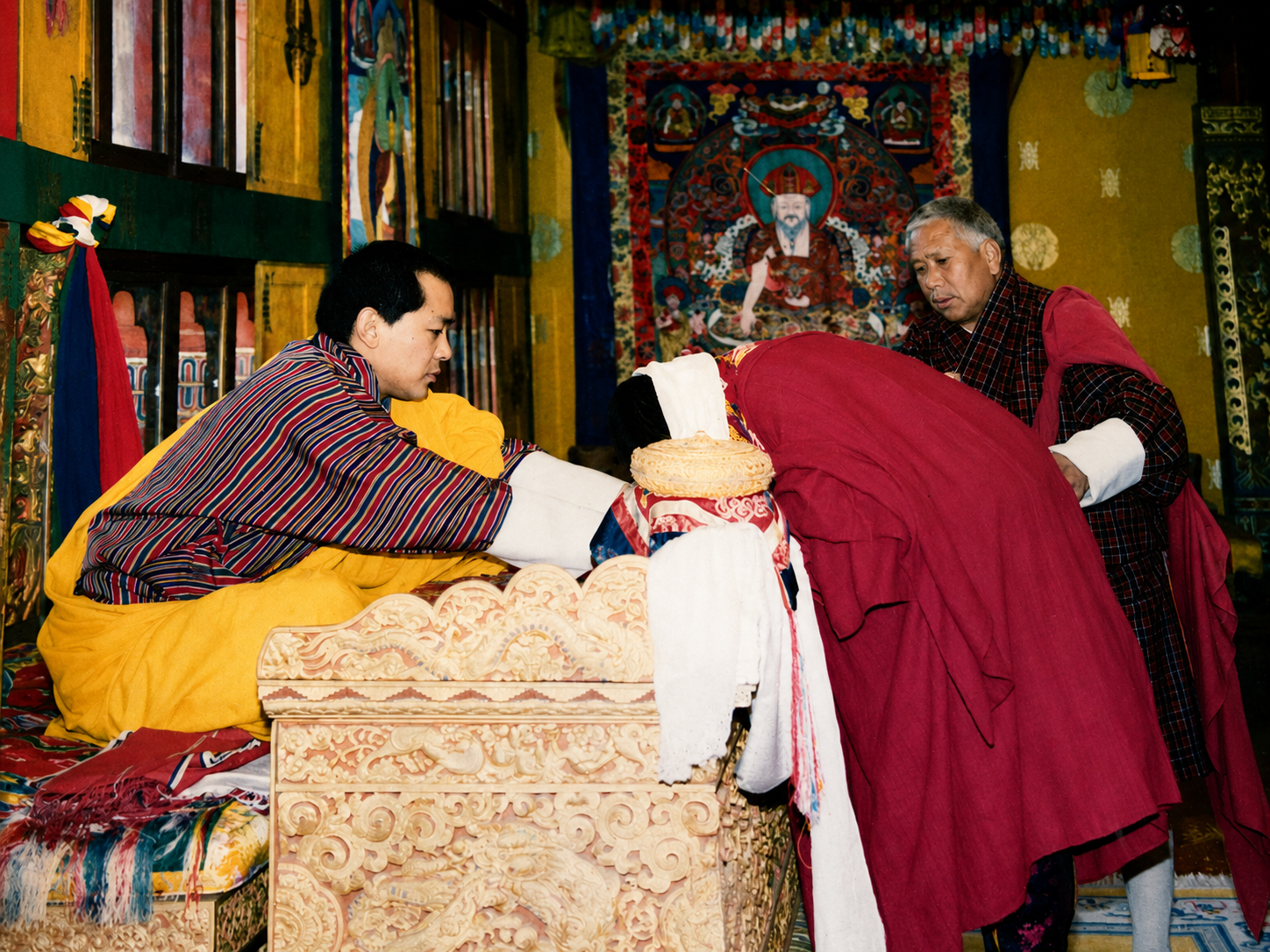
It further notes that during the reign of Zhabdrung Ngawang Namgyal, senior lay officials selected for state service came to wear different colours according to title and position. In this setting, officials of higher civil standing, including red-scarf officers, became visibly distinguished within the structure of governance.

01

Traditional writings describe kabne as a visible expression of respect, discipline, and ordered status in Bhutanese society.

02

Accounts from the Zhabdrung period describe different scarf colours being associated with different official positions, including ministers and red-scarf officers.

03

Lopon Nado's account describes nine high state ministers in temporal administration, while other dzongpons and senior officials generally wore red scarves according to rank.

04

Texts cited in the article describe Nyikelma as a higher entitlement than Chipzhon, including references to servants, a horseman, and the broader idea of double rank.

The article also quotes John Ardussi and Karma Ura on the composition of the governing structure in earlier Bhutan. Their discussion supports the idea that red-scarf officials included dzongpons, nyerchens, zimpons, and mgron-nyers of each dzong, while Chipzhon officials were understood to receive only part of the perquisites associated with the red-scarf rank.

A further legal reference appears in the translated Discourse on Legal Decree of Gongsa Mipham Wangpo, where section 93 is cited as assigning specific attendants to two-fold officials. In the article, this is used as another historical indication that Nyikelm referred not simply to ceremony, but to recognized administrative standing and entitlement.

Social Meaning

Title, Service, and Public Perception

The document presents Nyikem as more than an old administrative title. It also examines how Dasho is understood in modern society.

  • Public debate: Some saw Dasho as a visible status marker; others defended it as recognition earned through service.
  • Comparative context: The article references Datukship in Malaysia and knighthood in the United Kingdom to show how societies attach meaning to state honors.
  • Modern service: After 1973, the growth of Bhutan's civil service linked public office, education, and honour more visibly.

Core meaning: Conferment of red scarves by the Druk Gyalpo is tied to loyalty, dedication, patriotism, professionalism, leadership, and service to the Tsa-Wa-Sum.

Historical NGT gathering

NGT

Establishment of Nyikem Gongzhu Tshogpa

Key date: Nyikem Gongzhu Tshogpa was established on 26 May 2013 under the Command of His Majesty the Druk Gyalpo.

  • Purpose: The date marks NGT as an institution formed through royal command and national purpose.
  • Recognition: The foreword by Lyonpo C. Dorji, dated 7 October 2013, recognizes former Nyikem officers' outstanding service to the Tsa-Wa-Sum.
  • Knowledge sharing: Members were encouraged to volunteer and share experience with schools and institutions of learning.

Continuing role: NGT combines recognition with responsibility, ensuring that the wisdom and practical experience of former Nyikem officers continue to benefit younger generations and the wider nation.

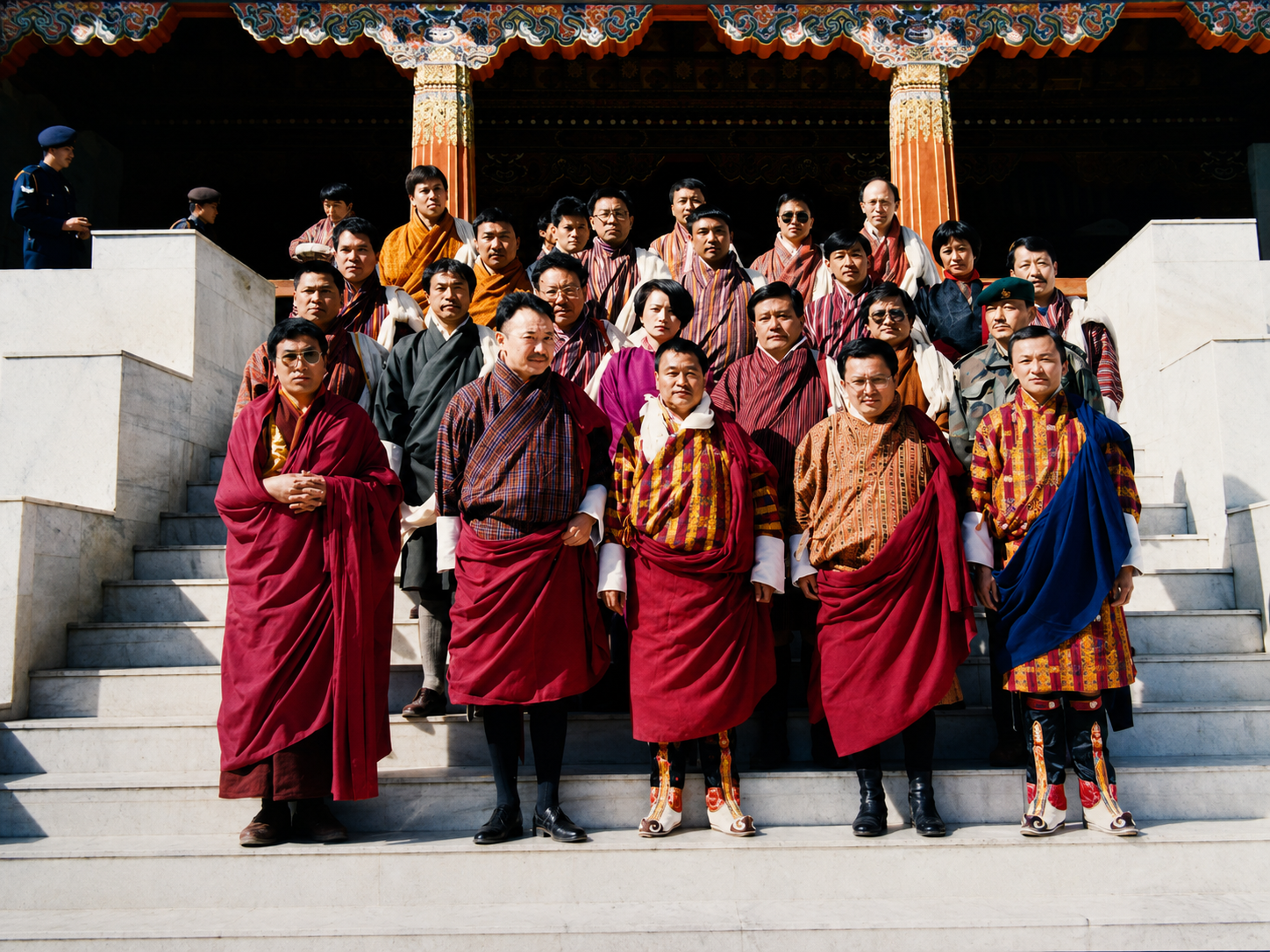
NGT members gathered in formal national dress

Continuity

Why This History Matters

Read as a whole, the document links several layers of Bhutanese public life: older ideas of rank and entitlement, the symbolic meaning of kabne, the historical role of senior officers in governance, the modern meaning of professional public service, and the creation of NGT as a way to preserve experience in service of the country.

That continuity is what gives the history page its purpose. Nyikem is not described only as a title to be admired; it is presented as a tradition of responsibility, dignity, and contribution that culminates in the continuing work of Nyikem Gongzhu Tshogpa.